Understand the user
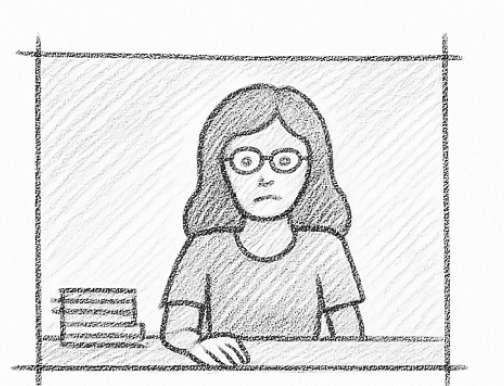
- Storyboard. Scenarios for fidgeting on demand and capturing mood.
- Persona canvas. Creative, busy, anxious, wary of privacy.
- Empathy map. What they think, feel, say and do around health data.
Web3 · Health data · Case study
Own the data your mind makes.
A fidget you can actually hold, plus an app. Heart rate and mood become records you own, encrypt and share when you want to.
Overview
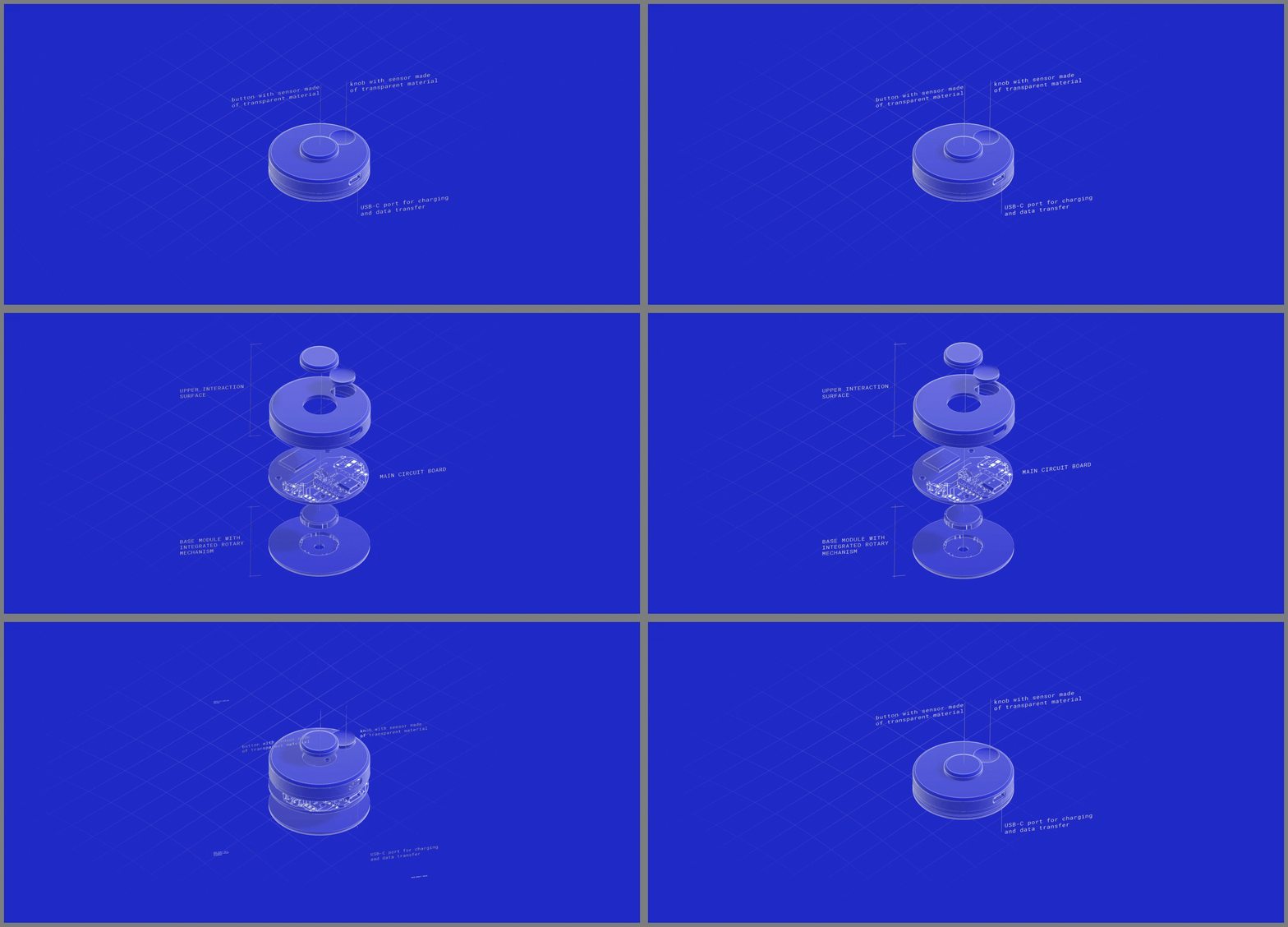
CipherPal is a smart fidget and a web app. You fidget, it picks up biometrics and mood, then stores them on-chain so you keep the data, not the platform.
Shared Access lets a clinician see scoped, revocable records on Polygon. This write-up follows the work from research through UI, as part of a PhD on blockchain wearables people might actually use.
It is for stressful moments, with the same fidget feel as a toy you already own. Not a medical device. A way to watch mood, stress and focus.
Concept
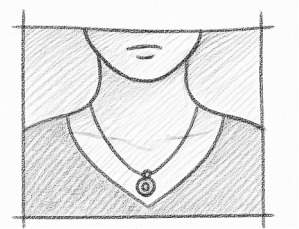
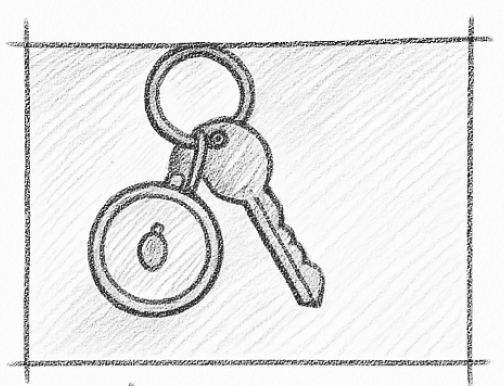
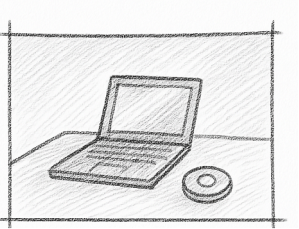
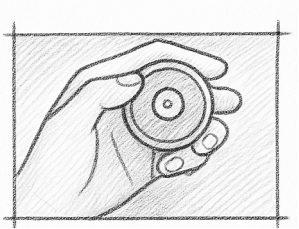
Before CAD and 3D prints, CipherPal was pencil. Sketches about what it means to hold the keys to your own health data.
The name is cipher (encryption) plus pal (someone you keep close). Early ideas went from a pendant to a wrist piece. The form that stuck was a puck you fidget with, feel in your palm, and plug in when you are ready to upload.
Each sketch is a principle: keys you control, biometrics at your fingertip, verification on your terms, a device that sits beside the laptop, not above it.

Challenge
The hardest screen was not the dashboard. It was the wallet. Signing, gas, MetaMask, on-chain writes: words that scare anyone who just wants a health tool. Everything after that had to make blockchain feel trustworthy without a glossary.
Research
The same iterative process as our Sensors paper, grouped by what we were trying to learn: the user, the service, then real people in the room.
Wireframes
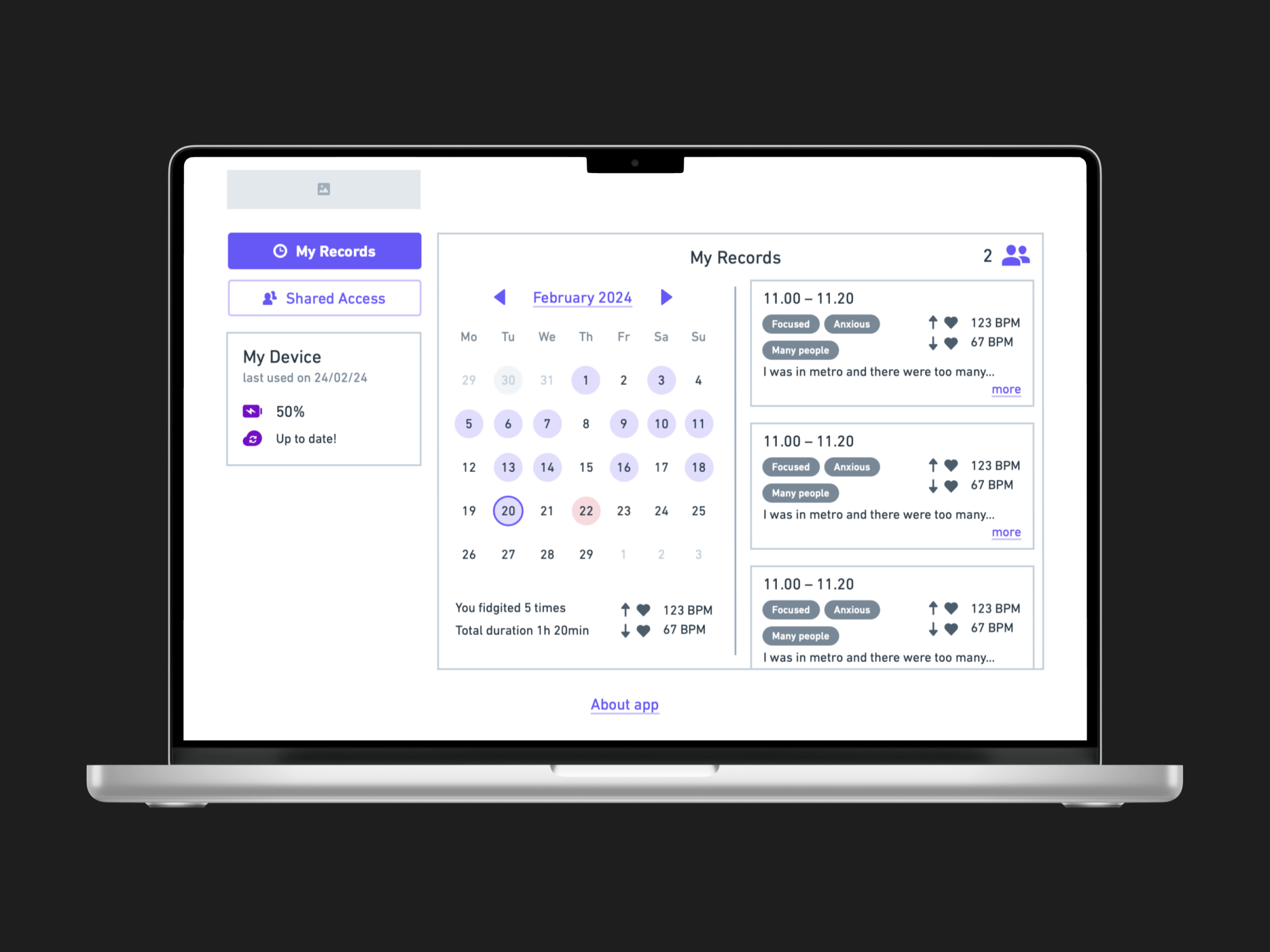
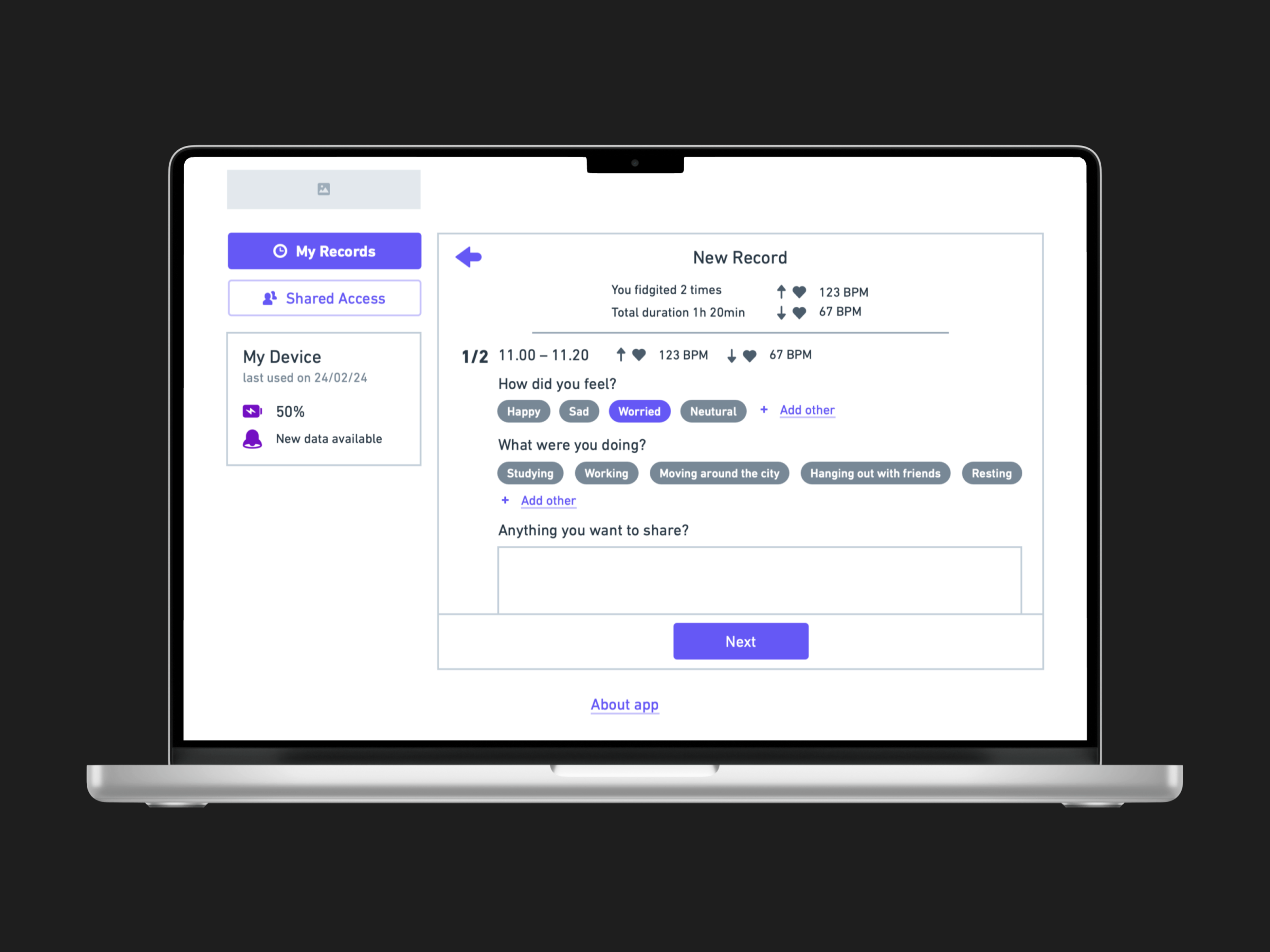
Once the flows were clear we wireframed the hard paths at lo-fi: wallet setup, device linking, on-chain upload, clinician access. Then seven people walked them remotely on Useberry.
User testing
Focus groups and mid-fi sessions put the fidget in people's hands: tactile feedback, grip, where the sensor sits, how it feels in real use. Then they uploaded through the web app, looked at records and tried shared access in the lab.
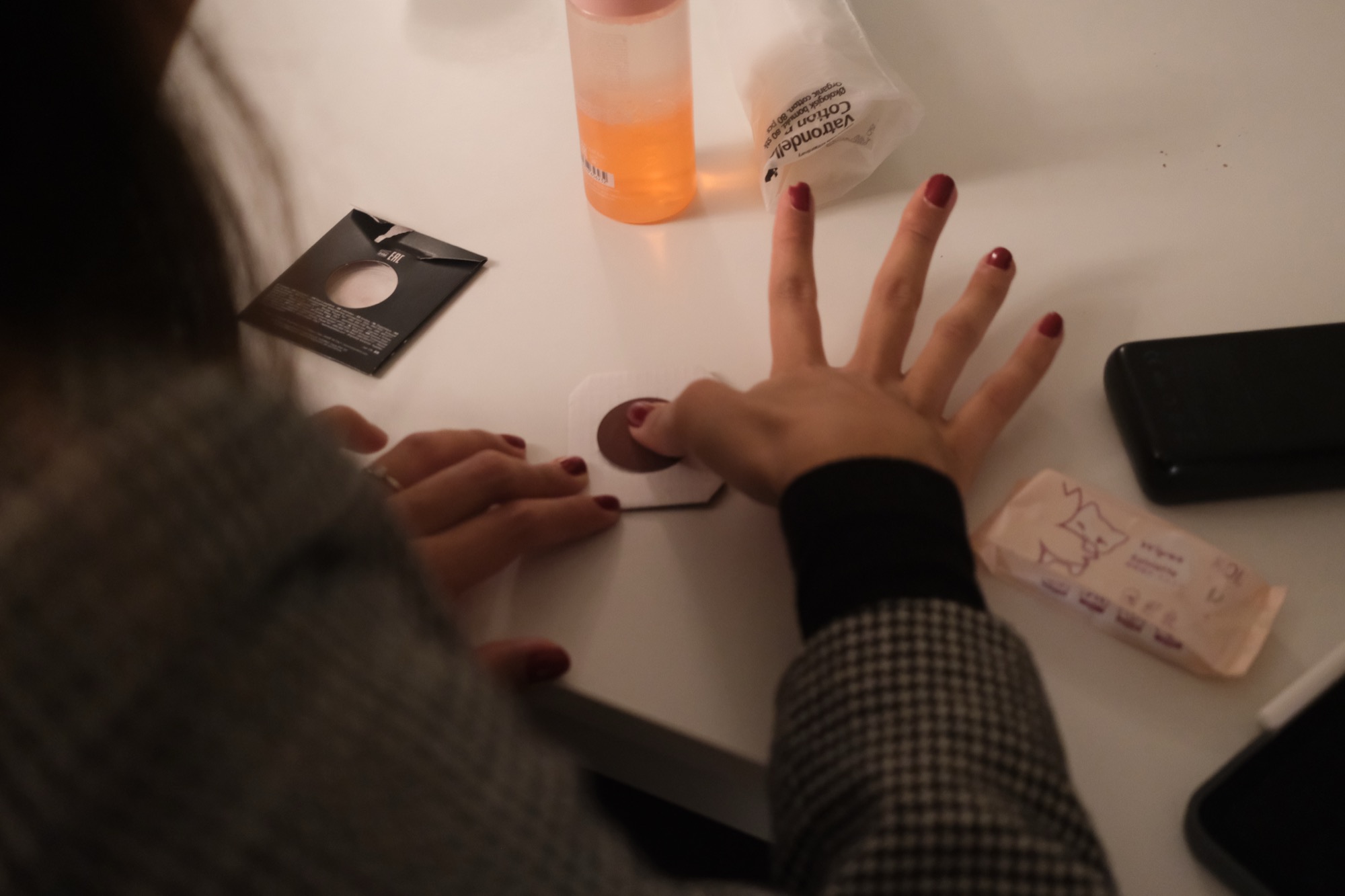
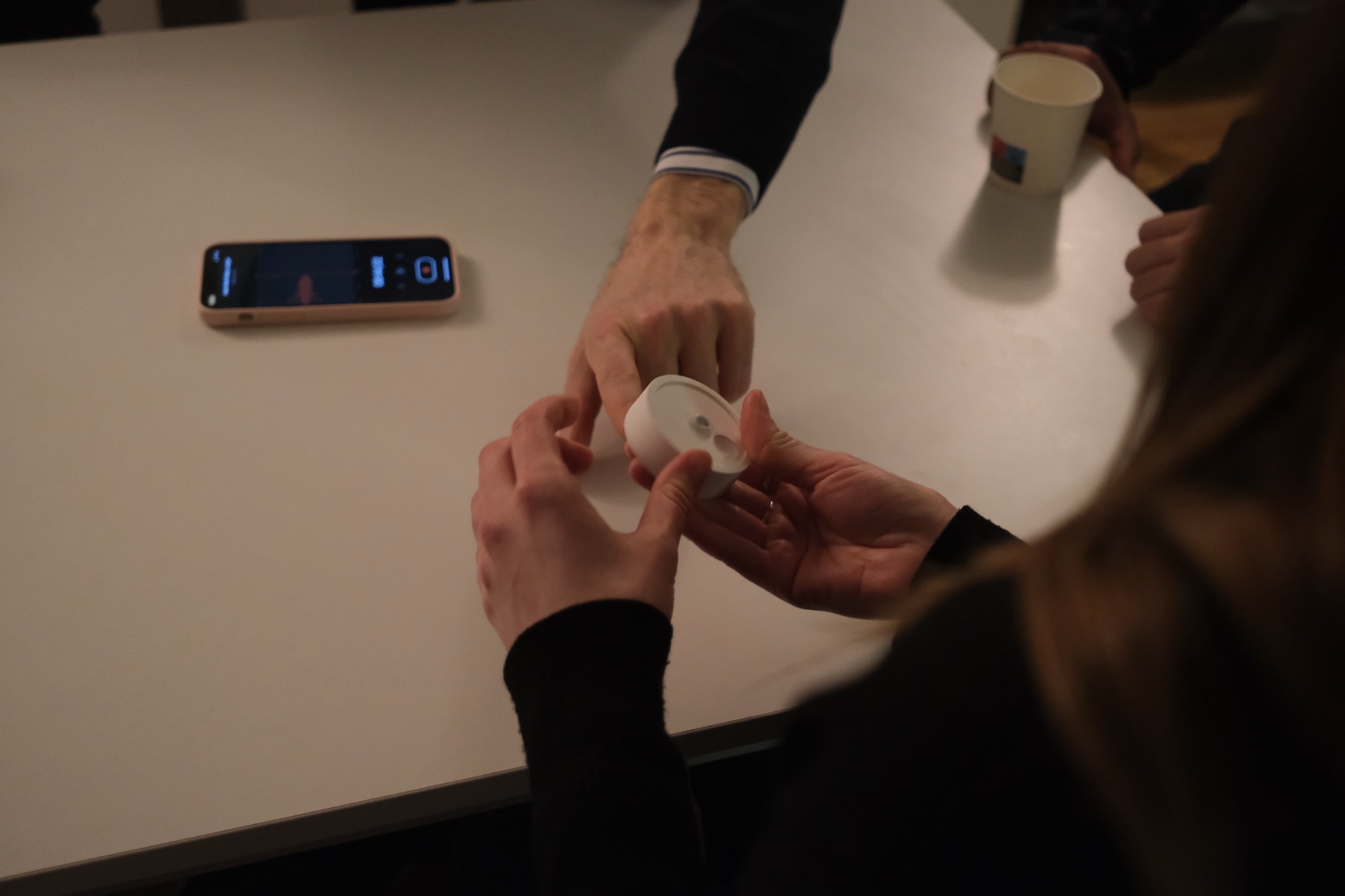
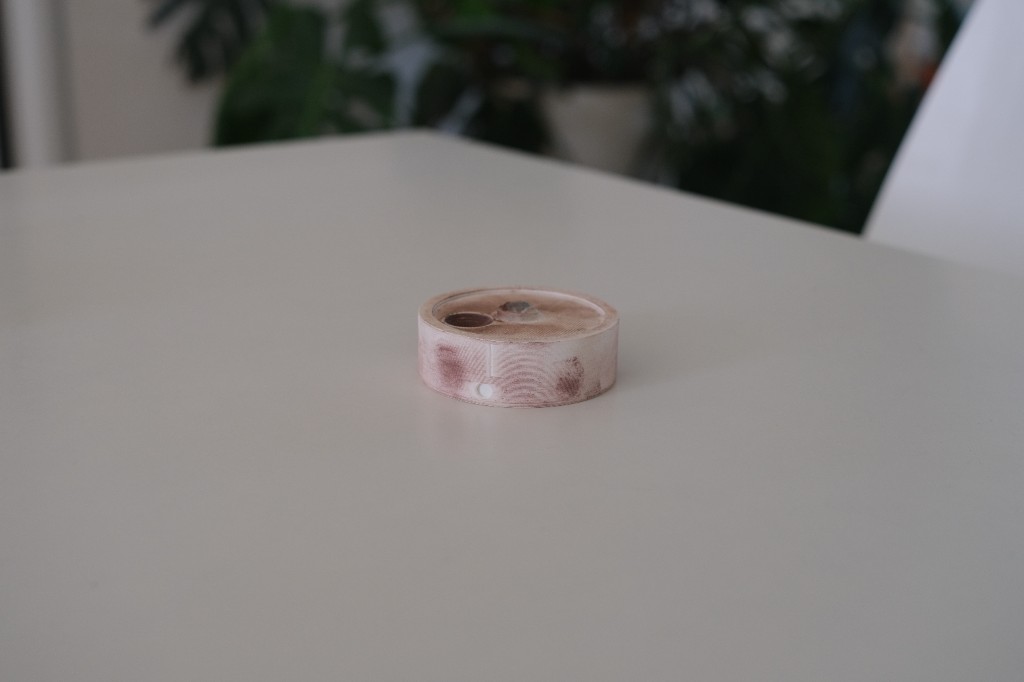
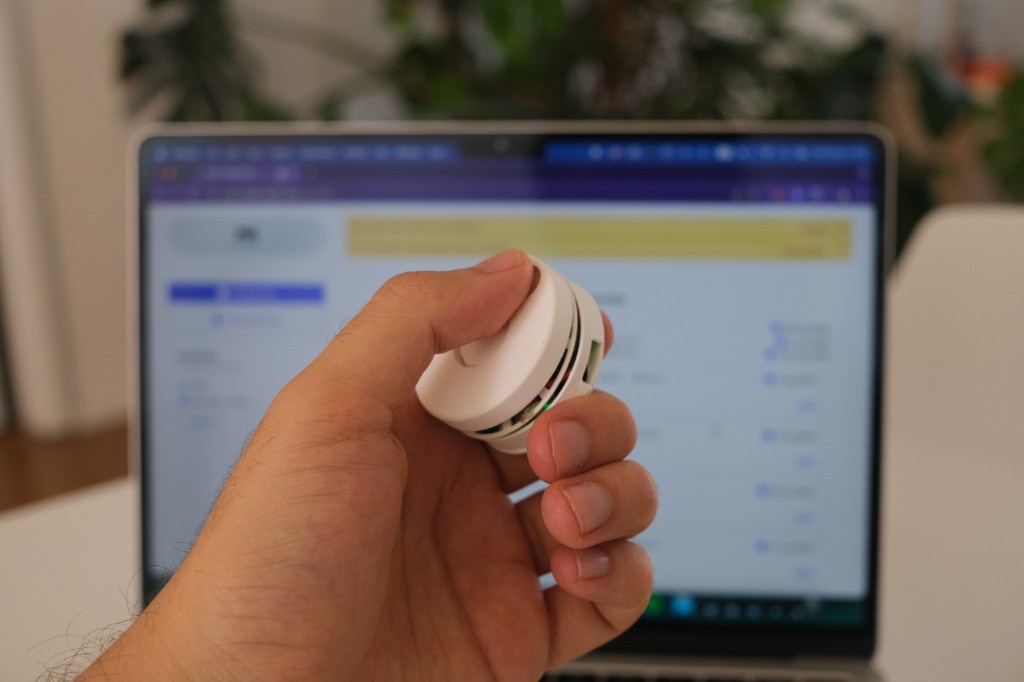
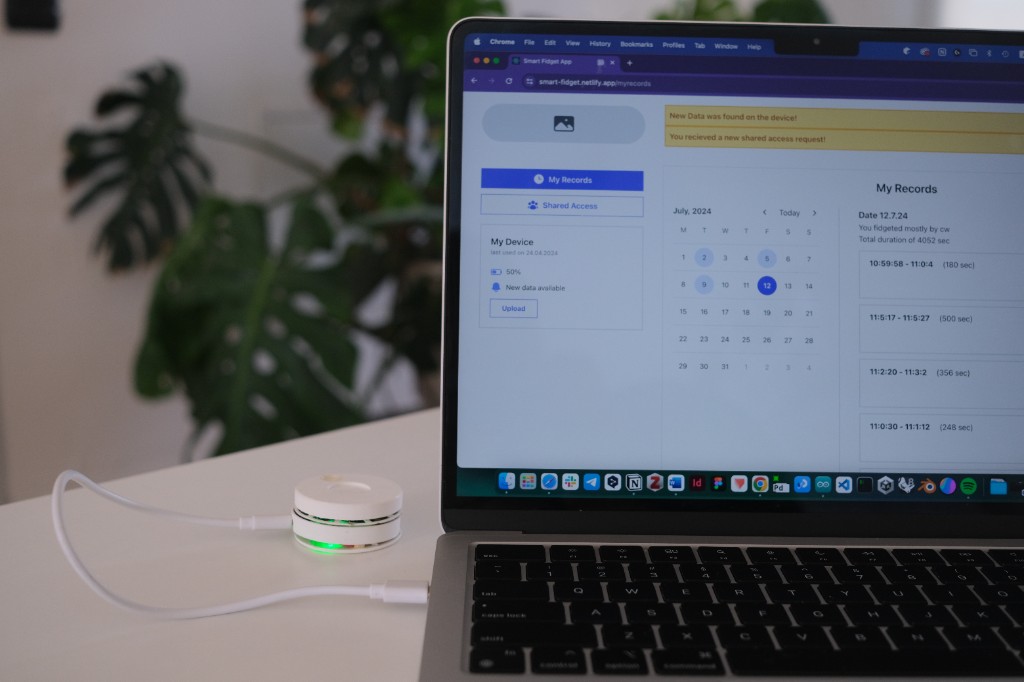
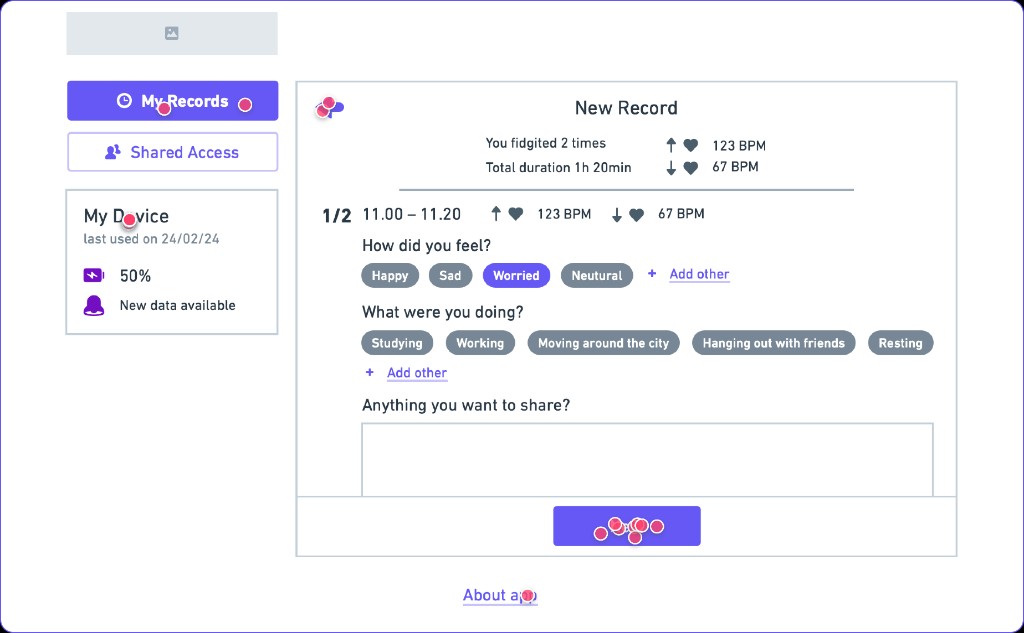
Focus group (n = 6), wireframe testing with click heatmaps (n = 7), mid-fi prototype sessions (n = 10). From lo-fi in the hand to lab uploads with the working device and app.
Hi-fi prototype
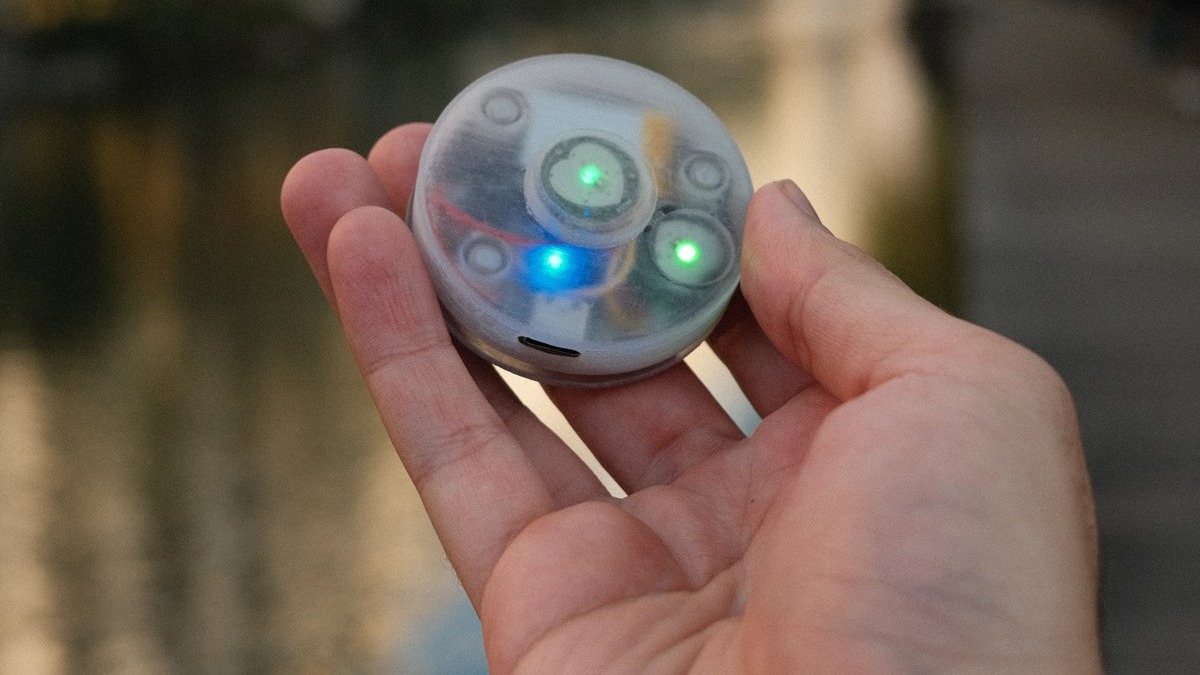
In parallel we built a working device: PPG sensor, rotary encoder, LED state, flash storage. Capture had to feel like fidgeting, not filling in a form.
Product
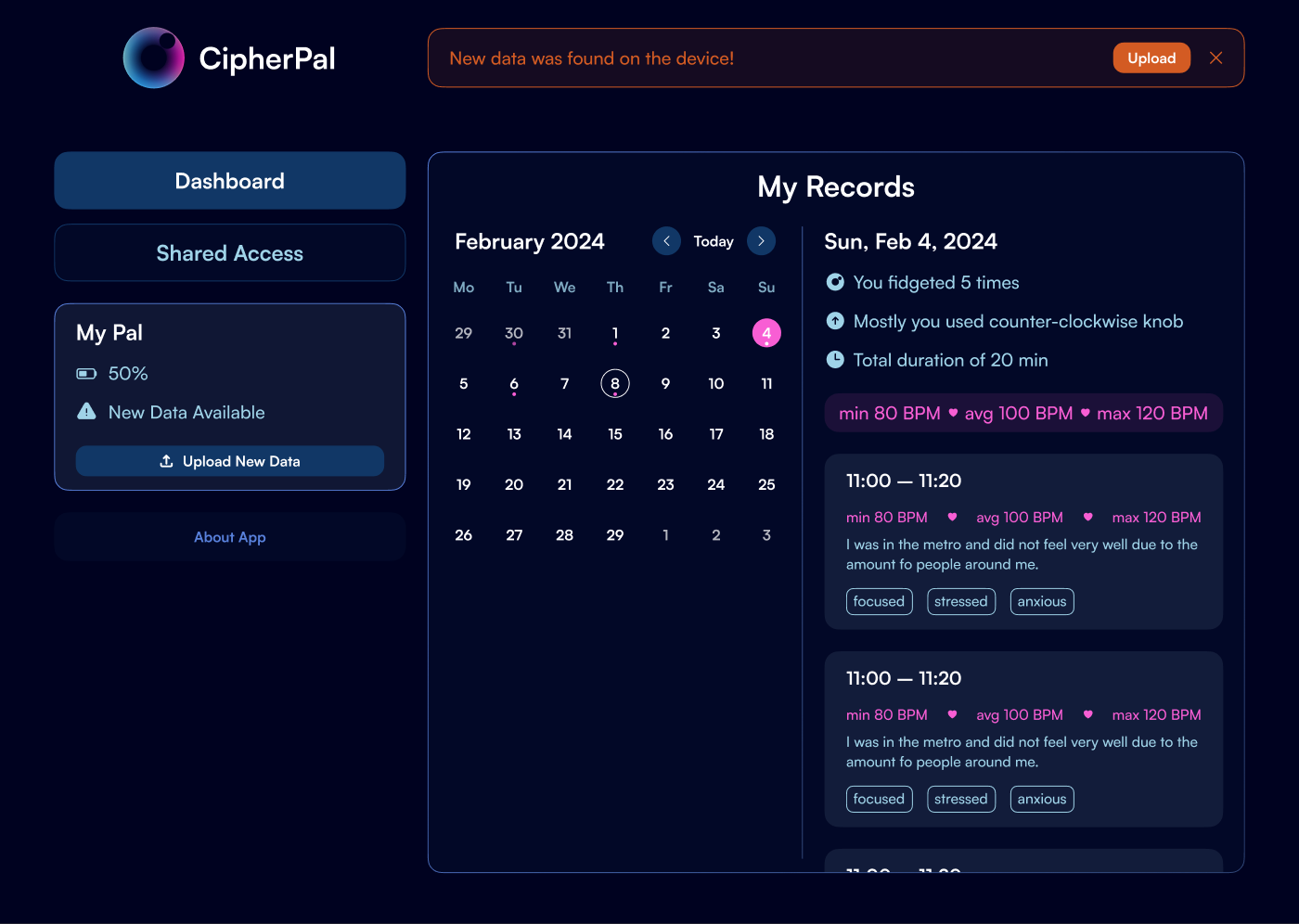
Testing pushed us toward a dark vault: BPM stats, mood-tagged episodes, on-chain links, and one pink accent so it does not look like a hospital.
What makes it work
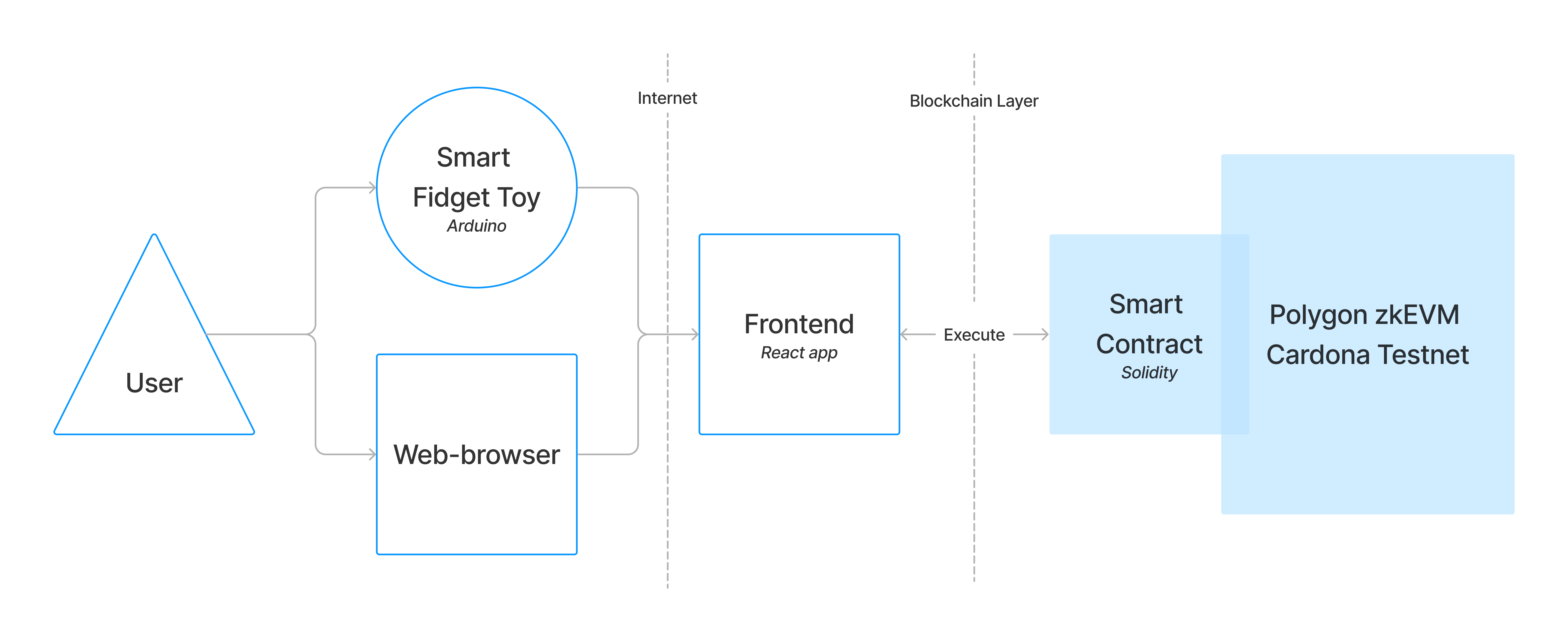
Three layers: device, React frontend, on-chain contract. Data moves from fidget to Polygon only when the user uploads.
Fidget on the device, connect over USB, sign in the browser. MetaMask links the React app to a Solidity contract on Polygon zkEVM Cardona Testnet.
Uploaded records clear from device memory. Users tag mood, add notes and grant scoped Shared Access when they choose.
Every record links out to Polygonscan. Ownership you can actually check.
BPM sits next to mood tags (focused, stressed, anxious) and free-text notes.
Grant a therapist a scoped, revocable window into your history.
“My Pal” battery and new-data alerts bring the physical companion into the app.
10 · Design language
Deep navy for trust, a gradient orb for identity, a warm pink so health data does not look clinical. Alerts go from informational to urgent, not all at once.
11 · Reflection
Decentralised data only matters if people feel in control without a glossary. The chain is the guarantee. The design win is that you do not have to think about it.
Related publications
CipherPal grew out of a PhD programme on human-centred blockchain health technology. These five papers cover the design toolkit, device build, evaluation method, and broader research framing.
PhD framing: user acceptance toolkit, CipherPal case study, and Web3 design guidelines.
Design theory: three projects on trust, adoption and health wearables.
CipherPal evaluation: Web3 guidelines review, UTAUT2 toolkit, and a three-day user study.
Demo paper: the device, on-device encryption, IPFS storage and companion app.
First study: survey, focus group, wireframe testing (n = 7) and prototype testing (n = 10).